← Journal3D Web - 5 min read
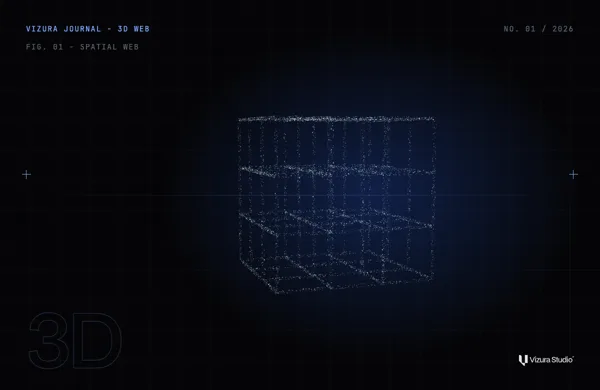
3D websites for B2B: when interactive WebGL earns its keep
3D on the web used to mean slow, heavy and invisible to search. Done right, it is the most effective way to make an abstract B2B product tangible.
 Vedran ObradovićFounder, Vizura Studio®
When 3D is worth it
- Your product is invisible. Networks, infrastructure, models and platforms are hard to photograph. 3D can show the system behind the screen - like the storm-lit ocean and particle globe in the Deepsea Networks redesign.
- You have a story, not a feature list. A scroll narrative with chapters holds attention far longer than a hero and three cards.
- It is a flagship moment. Launches, fundraises and category-defining products deserve a presence people share.
When it is not
If buyers need to find a price, a document or a login fast, 3D is in the way. Use it where attention is the goal, and keep task-driven pages simple.
Performance rules I build by
- A mobile version of every scene, not a scaled-down desktop one.
- Real HTML content under every 3D chapter, so search engines and AI assistants read the story too.
- Lazy-loaded scenes, compressed geometry and a strict frame budget.
- A calm reduced-motion fallback for accessibility.
Meaning over decoration
The best 3D is not there to impress, it is there to explain. In the Trackaroo concept, the terrain and a fading signal indicator make visitors feel what offline navigation protects them from. In GameBoost, an exploded wireframe can turns ingredients into something you explore.